I Got Lost During a Night Scuba Dive — Here’s What Really Happened (And What You Should Do)
(My Real-Life Terrifying Experience on a Night Dive)
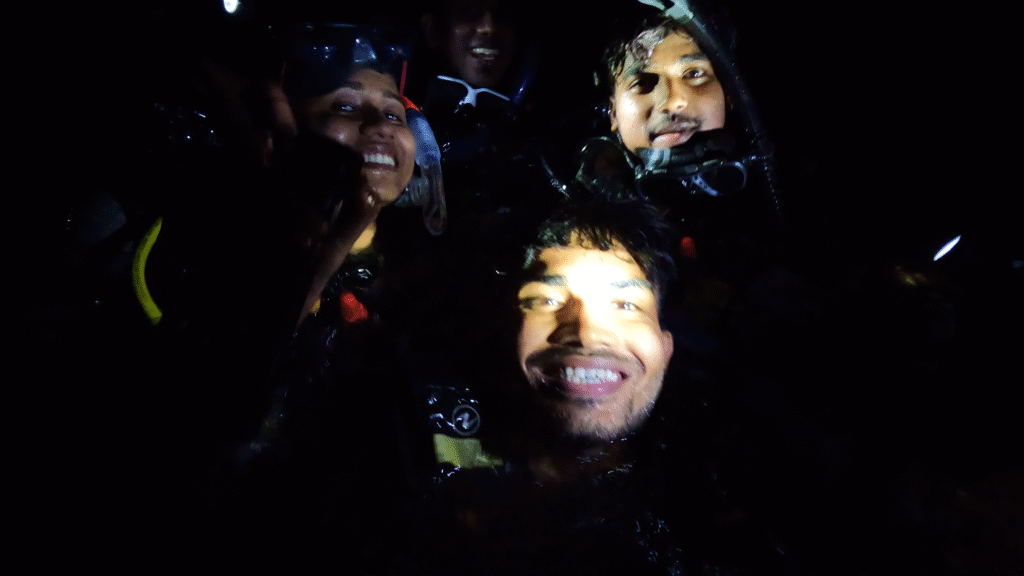
Night diving is magical… until it suddenly becomes terrifying. And trust me — I learned this the hard way during my second ever night dive, when a simple experiment with my weights turned into one of the scariest underwater moments of my life.
In this blog, I’m sharing the exact incident, how it unfolded, how I handled the fear. Plus — if you want to experience night diving safely, I’ll tell you how to do it properly through the Advanced Open Water Diver Course.
The story of Advanced Water Diver Course
That day, I decided to experiment a little with my dive weights — the same ones that help you descend smoothly underwater.
Bad idea. With fewer weights than usual, I simply… couldn’t go down.
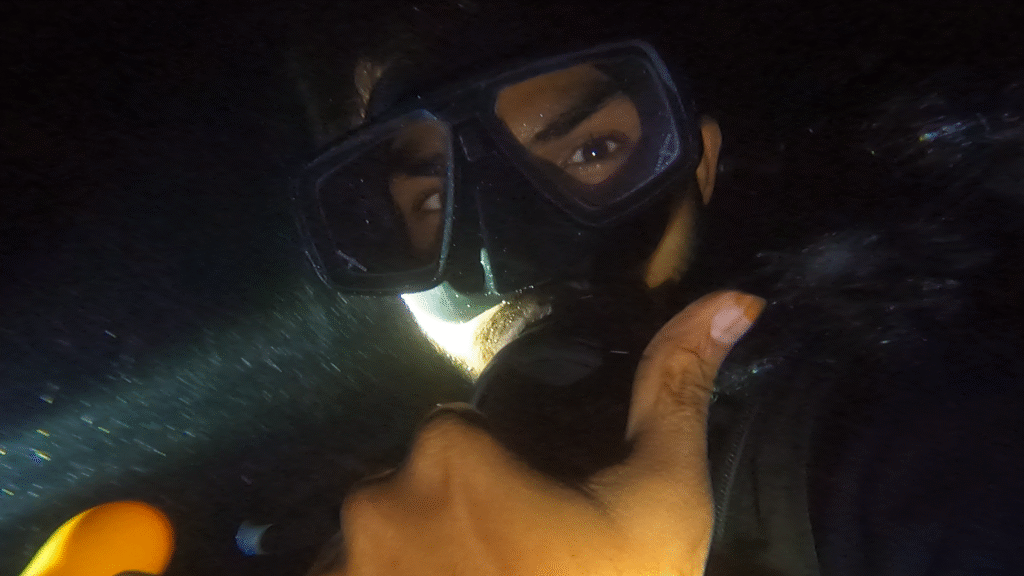
Everyone else had reached the ocean floor with their torches, exploring comfortably. Meanwhile, I was floating 3–4 meters above them, circling around in the dark like some lost underwater drone.
Luckily my instructor knew me well, and because this was my second night dive, he wasn’t too worried. But the real trouble was about to begin.
The “Lights Off” Challenge — and My Panic Begins
Towards the end of every night dive, we do a fun challenge:
Everyone sits together on the ocean floor and turns off their lights for one minute.
Easy, right? Except… I wasn’t on the ocean floor. I was still hovering awkwardly above everyone.
Still, I switched off my torch.
And suddenly — BAM. Pitch black. Absolutely zero visibility.
Within seconds, my mind went wild:
“What if the current carried me away?”
“What if I drifted too far from the group?”
“What if I’m now miles away from the shore?”
I kept telling myself:
“Only 10 seconds have passed. Relax.”
“You’ve done this before.”
“Count to 40, they will switch the lights back on.”
But my brain insisted:
“Bro, it’s been one hour. You’re lost.”
Fear took over. My breathing got heavier. I couldn’t stay underwater anymore.
I finally gave up and switched on my light.
I pointed it down — nothing. No divers. I pointed it around — still nothing. I pointed it up — the surface was right there.
I immediately swam up, heart racing… And to my surprise, the shore was right next to me.
Not even far. Not even close to “lost forever”. Just… right there.
And within 30 seconds, I saw the group’s lights turning on below as they began ascending.
When they reached the surface, my instructor looked at me and asked:
“Why did you switch your light on so fast?”
Fast?! I thought I was missing for an hour!
It’s funny now — but in the moment, it felt like one of the scariest experiences of my adventure sports life.
What YOU Should Do If You Ever Get Lost on a Night Dive
Here are the actual recommended steps:
1. STOP — Don’t panic
Your breathing rate controls your thinking. Slow inhalations = clear decisions.
2. Look for light beams
Even faint beams travel surprisingly far underwater.
3. Check your depth
Are you too high? Too low? Stabilize.
4. Ascend slowly if completely disoriented
A slow, controlled ascent keeps you safe and visible.
5. Wait at the surface
Divers will always ascend back to the surface eventually.
6. Always trust your training
Your dive training is designed exactly for moments like these.
Want to Experience Night Diving Safely? Do It the Right Way.
Night diving is absolutely incredible — bioluminescence, silence, marine life… But it must be done with proper training, guidance, and safety awareness.
To do official night dives, enroll in the
Advanced Open Water Diver Course This course includes mandatory night dive training, navigation skills, and deep-water confidence.
If you enjoy adventure and want to upgrade your skills — this is the course you need.
If you’ve never dived before or haven’t completed your first certification:
This course teaches you all foundational skills, safety procedures, buoyancy control, and underwater confidence — so you’re fully ready before advancing to night dives.
Final Thoughts
Night diving is magical, humbling, and unforgettable. Yes, it can get scary — especially if you experiment with your weights a little too much like I did.
But with proper training, the right instructors, and calm decision-making, you’ll always stay safe.
And if you’re dreaming of exploring the ocean in complete darkness… I promise — it’s worth it.





Aakash
Amazning this is
Aakash Jain
So Do you wanna go for a Night dive?