Back To Top

Blog

What Every Beginner Surfer Should Know Before Their First Class in India

If you’re planning your first surfing class in India, you’re honestly in one of the best places in the world to begin. India offers warm water, diverse waves, affordable lessons, and a fast-growing surf culture—all of which make learning smoother and far less intimidating.


This guide is written from real beginner experiences, not textbook theory. It will tell you what actually happens, what to expect, where to go, and how to prepare—mentally and physically—before stepping into the ocean.

Why India Is a Great Place to Learn Surfing

India has a surprising advantage when it comes to surfing. We have all types of waves, from soft beginner-friendly ones to world-class advanced breaks.

More importantly:

  • The water is warm, unlike Europe or the UK
  • You don’t need heavy wetsuits
  • Surfing feels fun, not uncomfortable
  • Lessons are affordable, even with stay packages

This combination alone makes India an underrated but powerful surf destination for beginners.

Beach Breaks vs Point Breaks (Beginners, Read This Carefully)

Understanding wave types will instantly reduce fear.

Beach Breaks — Best for Beginners

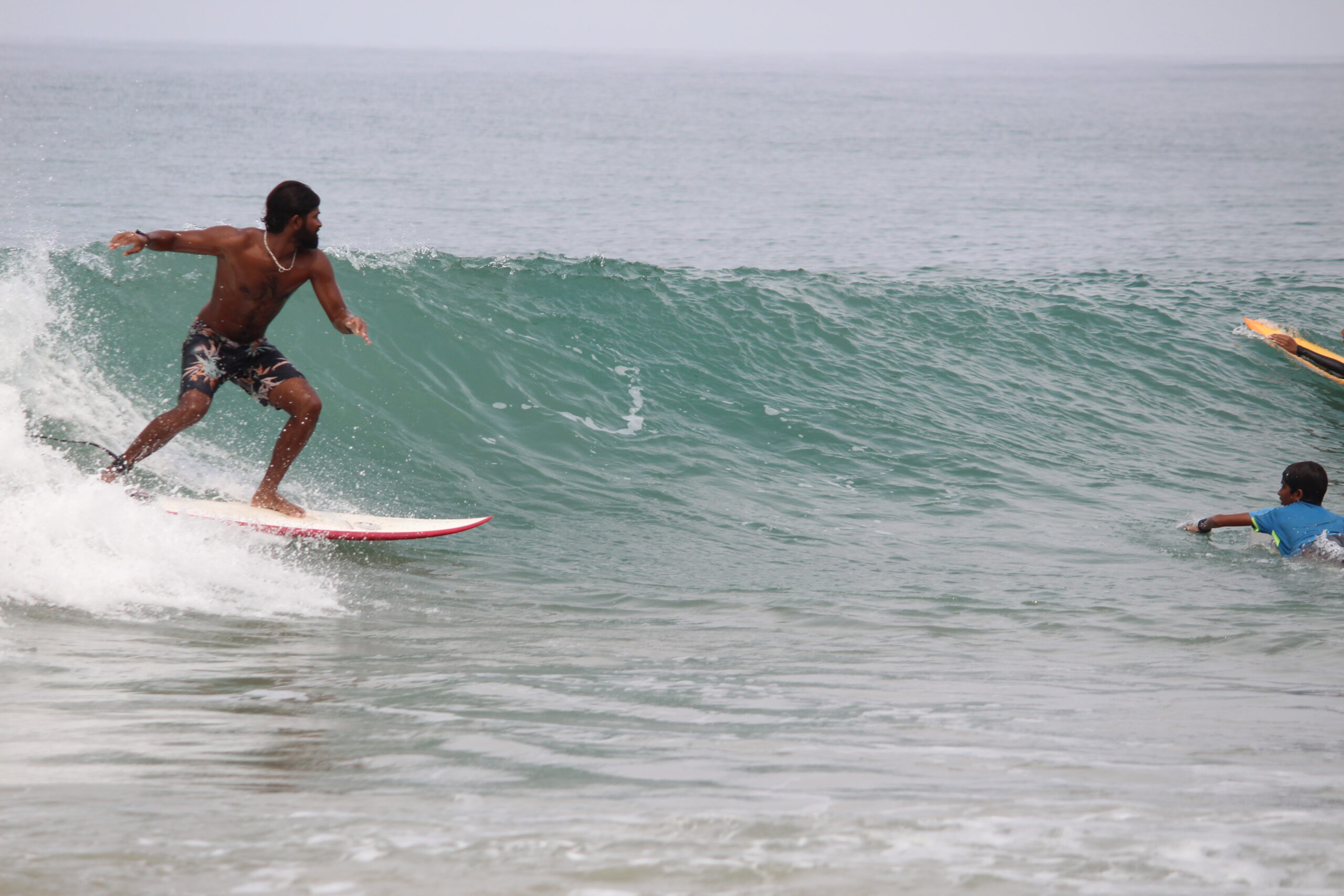
Beach breaks are waves that break over sand, not rocks.

They are:

  • Shallow
  • Safer to fall on
  • Easier to catch
  • More forgiving when you wipe out

This is exactly where beginners should start.

Popular beach break locations in India:

  • Mulki
  • Varkala
  • Select beaches in Goa
  • Pondicherry
  • Vizag

Point Breaks — For Later Stages

Point breaks break over rocks or reefs.

They offer:

  • Longer, cleaner rides
  • Better wave shape
  • More technical surfing

They are great—but not for your first few days.

Some places like Varkala have both beach breaks and point breaks, making them ideal for progression once you’re comfortable.

Why Mulki and Varkala Are Beginner Favorites

Mulki

Mulki is one of the most popular beginner surf towns in India. Almost every new surfer wants to learn here—and for good reason.


  • Consistent beach breaks
  • Calm learning environment
  • Strong surf culture
  • Focused beginner training

👉 You can explore lessons here:
Learn Surfing in Mulki

Varkala

Varkala’s surf scene is growing rapidly.

  • Beginner-friendly beach breaks
  • Access to point breaks for progression
  • Relaxed coastal vibe

👉 Learn more here:
Learn Surfing in Varkala

How Surfing Lessons Actually Work in India

Here’s what really happens during your first class.

  1. You arrive at the beach carrying soft-top surfboards
  2. You start with a proper warm-up
  3. Coaches conduct 15–20 minutes of theory, covering:
    • Ocean conditions
    • Waves and currents
    • Surfboard anatomy
    • Where to lie and stand
    • How to pop up

Then—you go surfing.

The Best Part?

You start surfing on Day One.

At the beginning:

  • You don’t paddle
  • The instructor pushes you into the wave
  • You focus only on popping up

Because of this, most beginners stand up within 4–5 waves.

You also choose your board based on:

  • Height
  • Weight
  • Balance

As you progress, boards get smaller and skills improve naturally.

International Surfing Festival, Varkala 2025

Expect Bruises (And That’s Normal)

You’ll probably:

  • Fall near the shore
  • Slide into sand
  • Get small bruises

This is normal—and honestly, worth it.

What Should You Wear & Bring

Wear

  • Rash guard or synthetic top
  • Swim shorts or swimsuit

Bring

  • Waterproof sunscreen
  • Towel
  • Drinking water

You don’t need:

  • Your own board
  • Expensive gear
  • Wetsuits
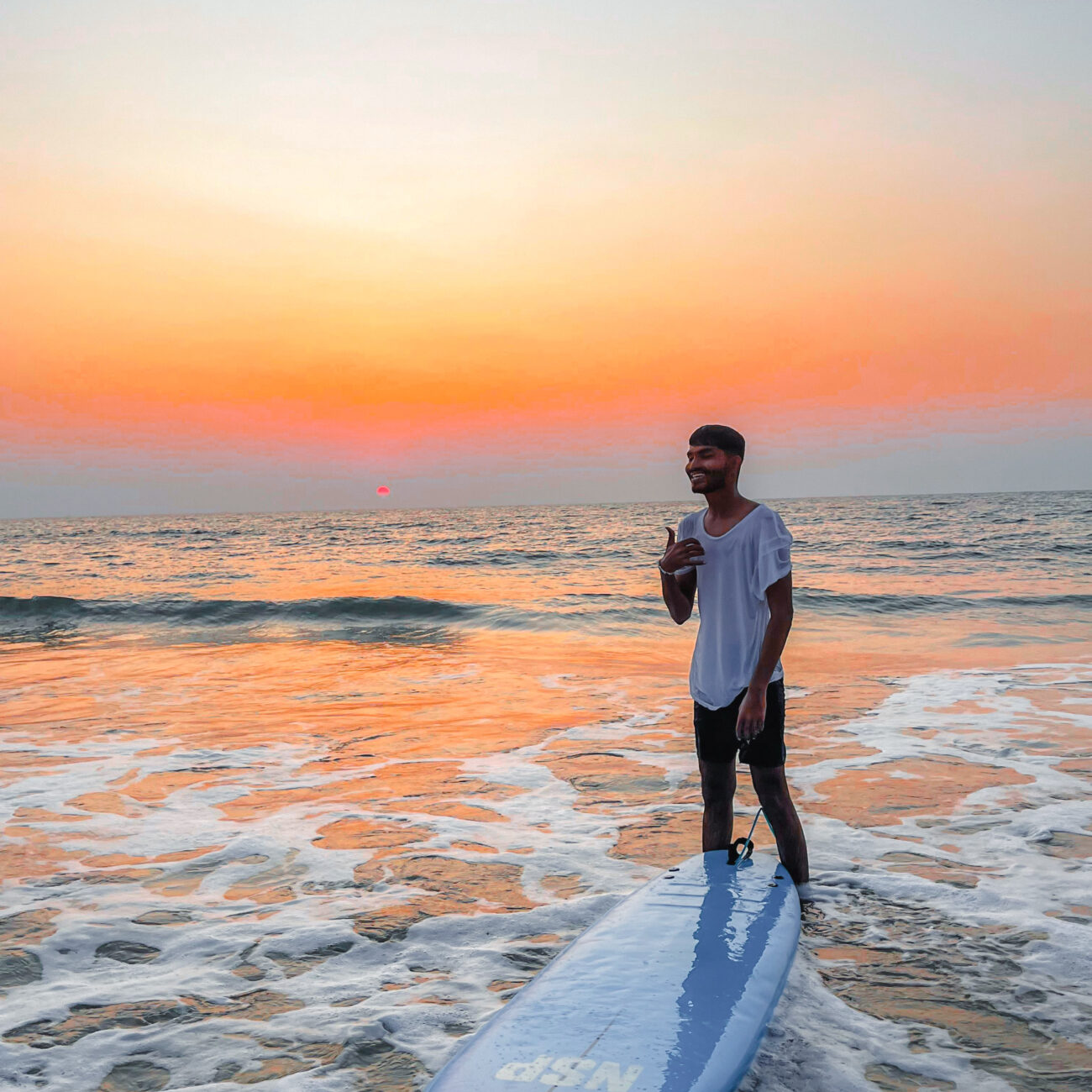
Sunset after evening surfing in Mulki

Common Beginner Mistakes (And How to Avoid Them)

1. Being Afraid of Water

Beginner surf zones are shallow.
Fall? You stand up.

Relax.

2. Looking Down or at Other People

In surfing, you go where you look.
Look straight—ride straight.

3. Everyone Going Together

Let surfers go one by one.
Sharing a wave leads to crashes.

4. Holding the Board Wrong While Walking Back

Always keep the board to your side, not in front.
Otherwise, waves will throw it into your face.

Basic Surf Etiquette Every Beginner Must Know

  • Don’t drop in on others’ waves – Who catches first, takes the wave
  • Respect instructors
  • Stay aware of the people around you – You could injure them
  • Follow local rules and lifeguards

Surfing is fun when everyone respects the lineup.

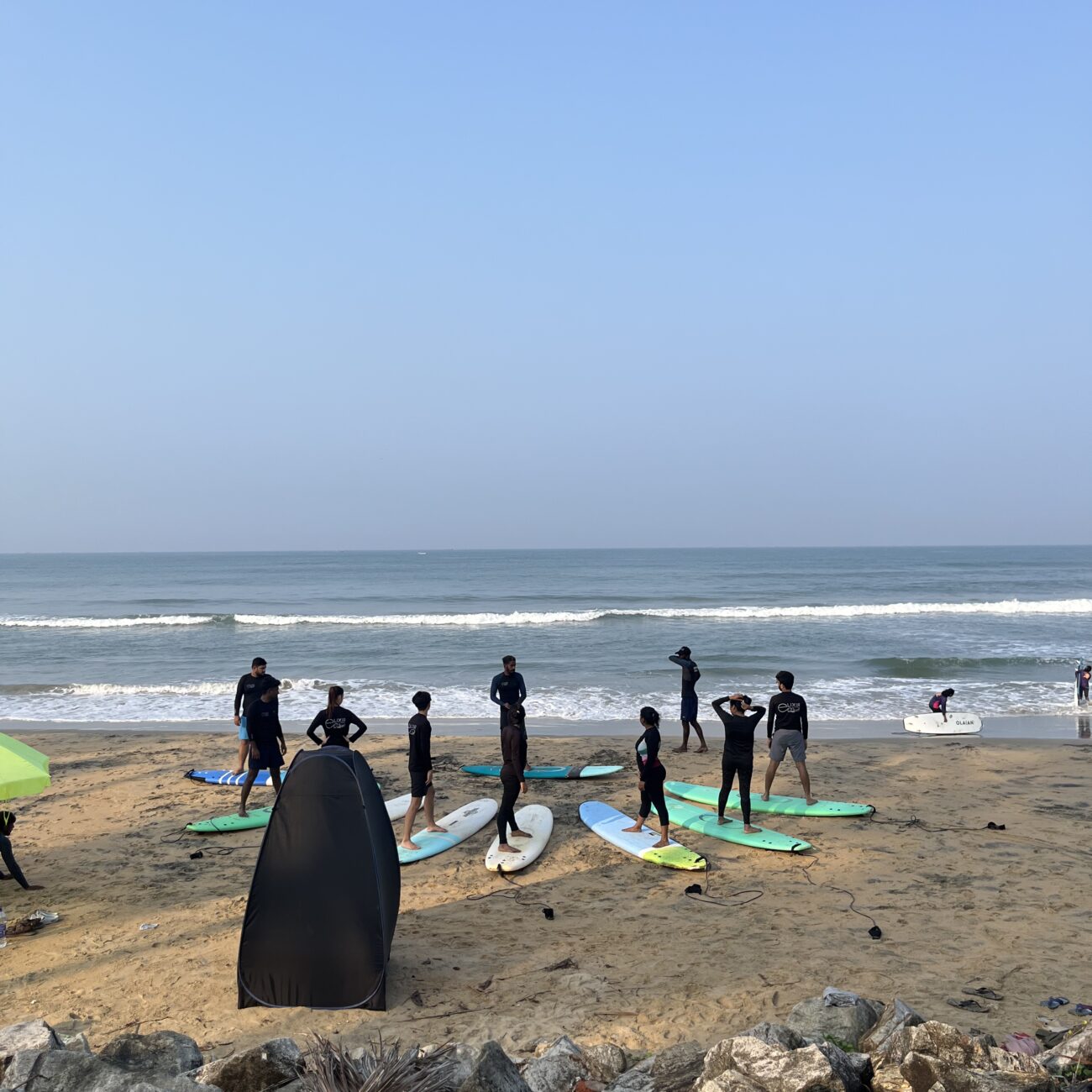
Group surf theory lessons in Varkala

Do You Need to Be Physically Fit?

No.

You don’t need:

  • Gym-level fitness
  • Perfect swimming skills

You do need:

  • Comfort in water
  • Basic movement confidence

Stretching and light cardio help. Athletic people may progress faster, but balance matters more than strength.

Confidence, Weight & The Mental Game

Many beginners—especially people who feel overweight—feel insecure about surfing.

Here’s the truth:

  • It doesn’t matter
  • Surfboards float you
  • Instructors handle momentum
  • You’ll likely catch a wave within 4–5 attempts

Confidence and patience matter more than body type.

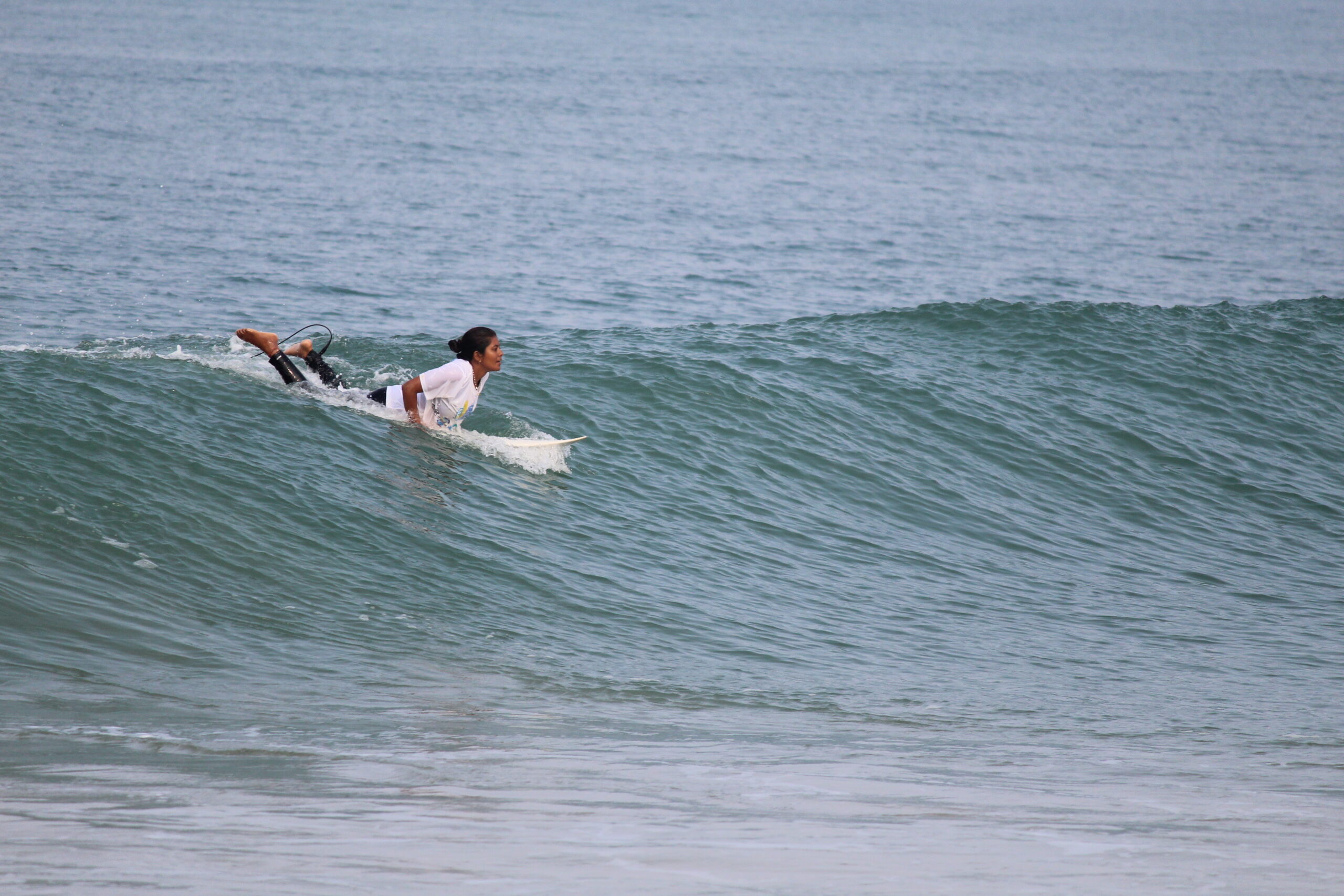
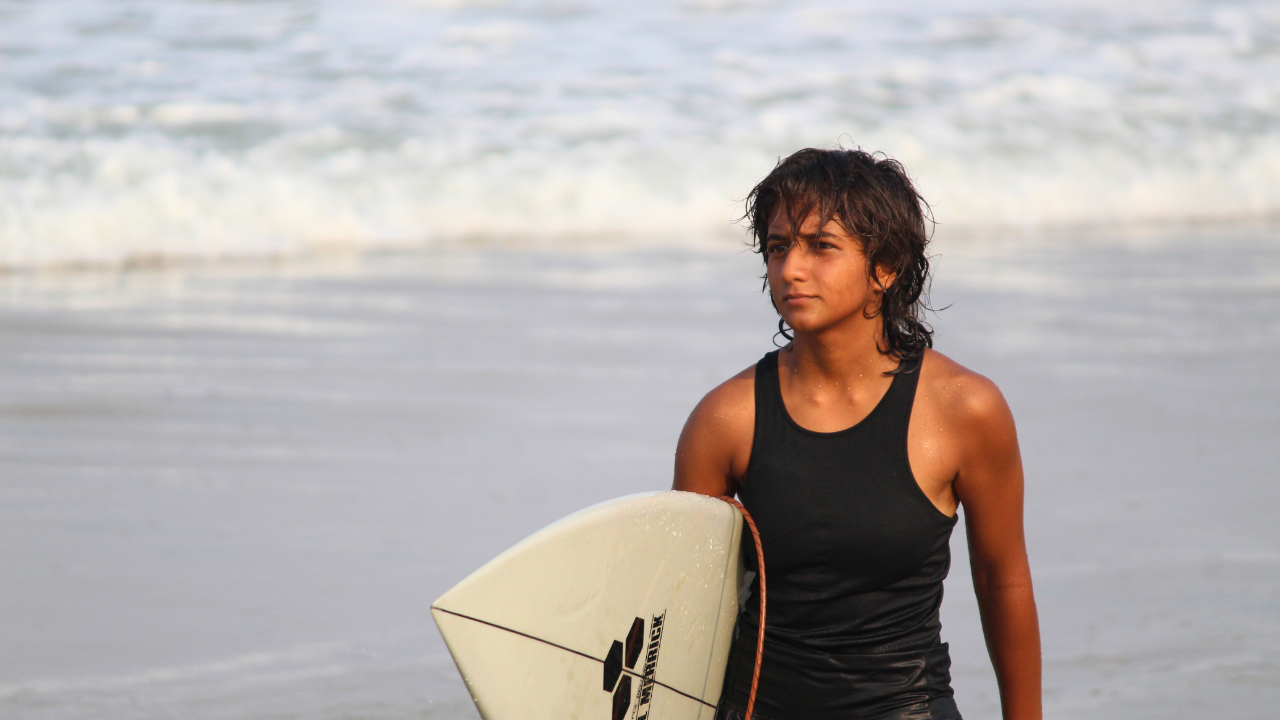
surfer, Lady surfer, surf board

What to Expect as You Progress

After the first few days:

  • You start paddling
  • You learn wave timing
  • You understand where to wait
  • You read waves and currents

Surfing is a journey. Every session teaches something new.

How to Choose the Right Surf School

Before booking, check:

  • Reviews
  • Instructor certifications
  • Safety standards
  • Beginner-friendly boards

If you’re booking through GoCareless, surf schools are already vetted and curated based on:

  • Budget
  • Quality
  • Experience

You simply choose what fits you best.

FAQs

Is surfing safe for beginners in India?

Yes. Certified instructors, shallow beginner zones, and controlled conditions make it very safe.

How long does it take to stand up on a surfboard?

Most beginners stand up on the first day, usually within 4–6 waves.

Do I need to know swimming before surfing?

No. You wear a leash, surf in shallow water, and always have instructors nearby.

What is the best time to learn surfing in India?

Almost year-round. Avoid peak monsoon (August–September) due to rough conditions.

Are surf lessons expensive in India?

No. India offers some of the most affordable surf lessons in the world.

Final Words

Surfing in India is approachable, fun, and beginner-friendly.


Don’t overthink it. Don’t overprepare.


Show up, listen, trust the process—and stay salty.

Founder of Go Careless and your next door adventure guy

Leave a Comment