



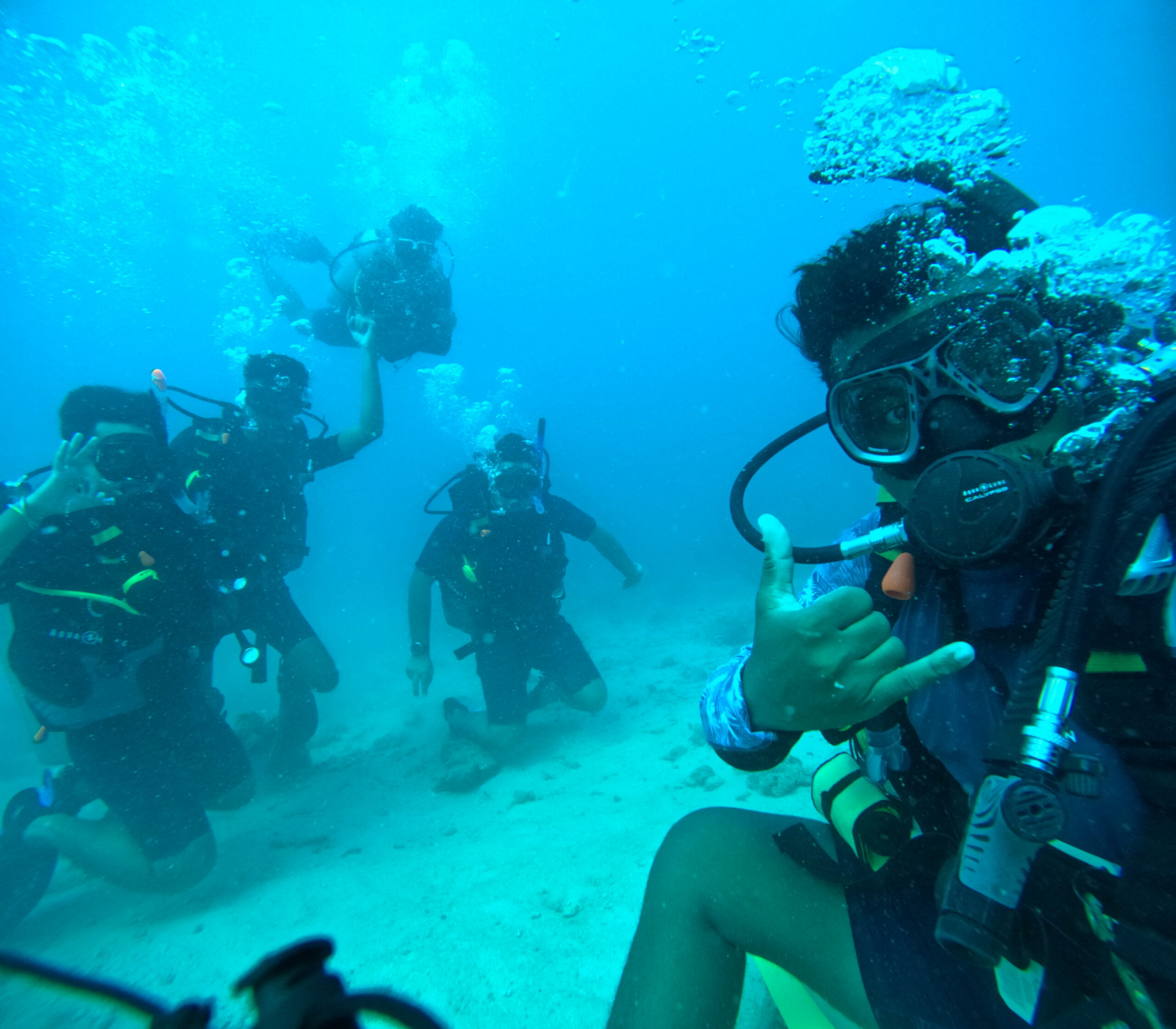
PADI Open Water Diver Course: Complete Guide, Cost, Requirements & Training Breakdown (2026)
If you’re dreaming about exploring the underwater world and becoming a certified scuba diver, the PADI Open Water Diver Course is the gateway. It’s the world’s most recognized beginner-level scuba certification — and the perfect first step for anyone who wants to dive deeper, travel better, and experience the ocean the way certified divers do.
In this guide, I’ll walk you through everything you need to know:
requirements, cost, training structure, gear, location options, and how we help you get certified with the best PADI schools in India.
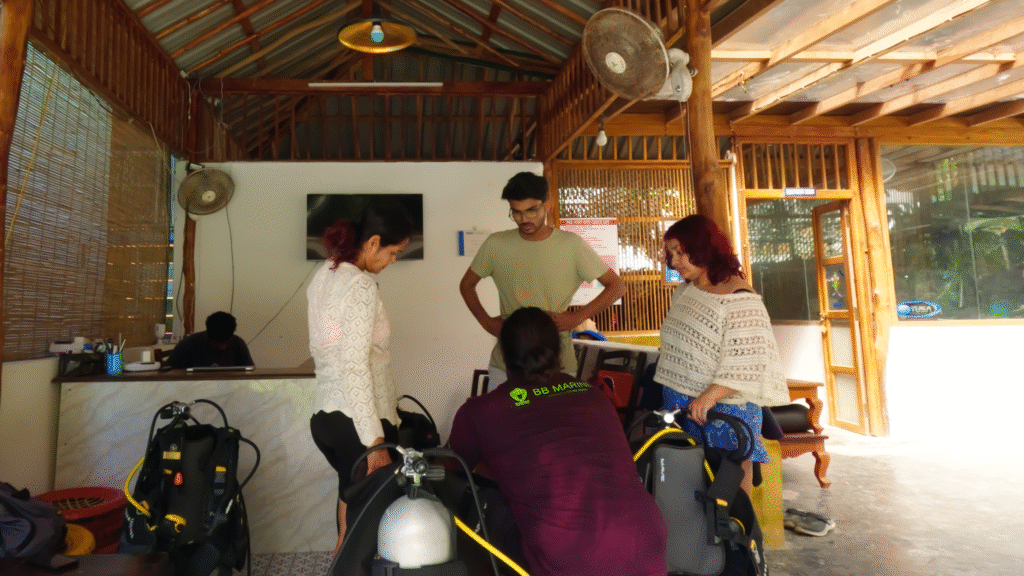
What Is the PADI Open Water Diver Course?
The PADI Open Water Diver Course is the first level of scuba diving certification — the entry point into real, independent scuba diving.
Once you complete this course, you can:
- Dive anywhere in the world
- Dive up to 18 meters (60 feet)
- Dive without an instructor holding your hand (you still dive with a buddy — it’s a buddy sport)
- Join dedicated dive trips
- Experience better dive sites that beginners at 12m can’t reach
- Get significantly cheaper dive prices everywhere
Certified divers get access to deeper, more beautiful dive sites where the real magic lives — corals, vibrant marine life, and clearer visibility.
This is where scuba diving truly begins.
PADI vs SSI — Which Certification Should You Choose?
When people search for scuba courses, they often see two names everywhere: PADI and SSI.
Here’s the simple difference:
- Both offer globally recognized certifications
- Both follow the same training standards, skills, requirements and curriculum
- But PADI is more widely recognized worldwide
- That’s why PADI courses cost about ₹3,000–₹5,000 more
So while SSI is also good, PADI remains the gold standard — especially if you plan to dive internationally.
Who Can Take the PADI Open Water Course?
Because scuba diving is a regulated adventure sport, there are a few requirements you need to meet.
Minimum Age & Health Requirements
You can take the course if you:
- Are 10–45 years old
- Have not undergone major surgery in the last 12 months
- Have no severe sinus, heart, lung, or breathing issues
- Are in generally good health and normal fitness
Before the course begins, we share a detailed medical form and discuss everything clearly.
Swimming Requirement
Yes — you must know basic swimming.
PADI requires you to:
- Swim 200 meters
- Float for 10 minutes
This is simply to ensure comfort in water. You don’t need to be an athlete.
What You Learn in the PADI OWD
The course is broken into three parts:
1. Knowledge Development
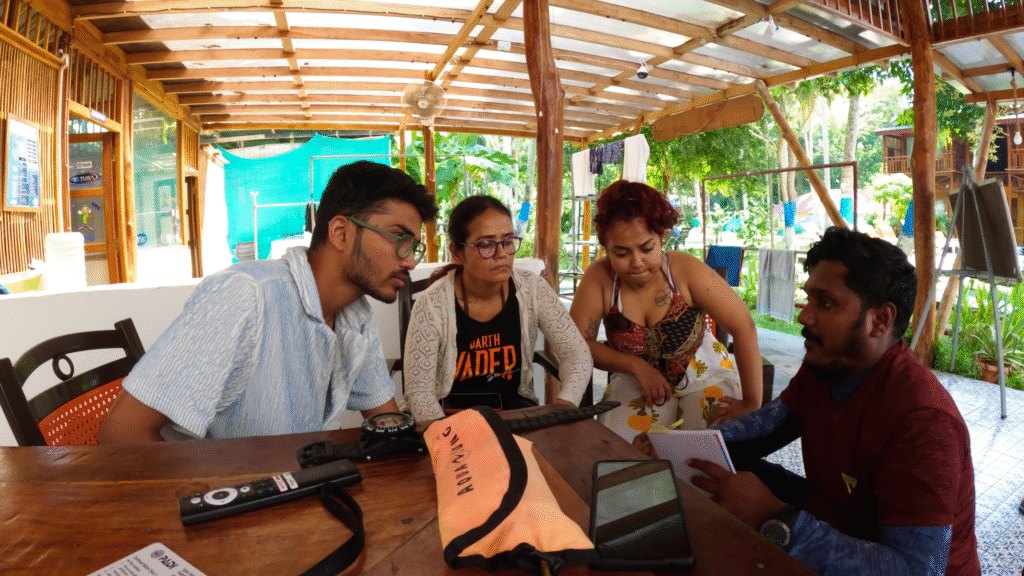
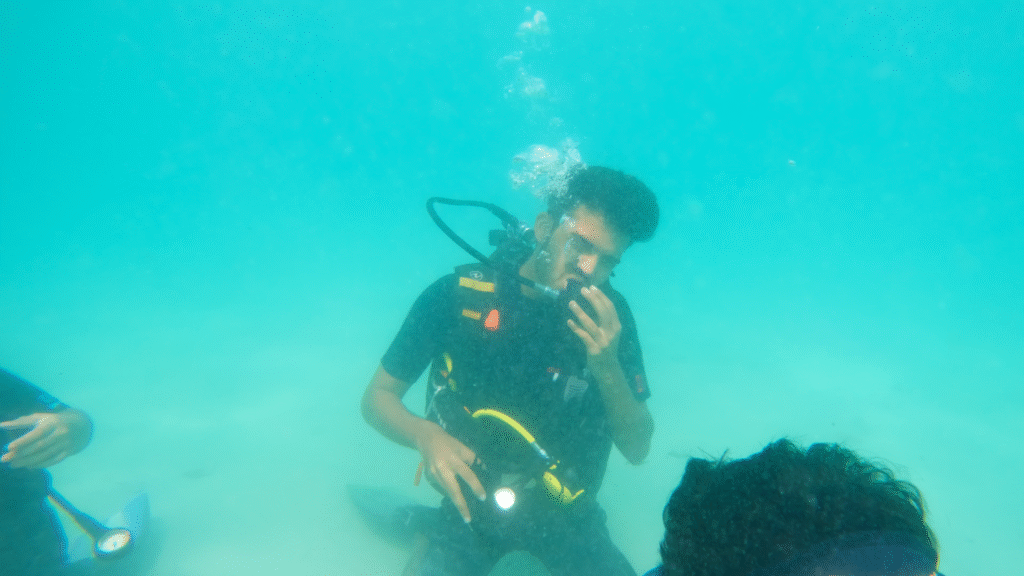
Before you even reach the dive center, PADI shares a set of theory lessons with you, & for obvious reasons, you should go to them lol. These lessons form the foundation of your scuba diving journey. In the theory module, you learn how your body behaves underwater, what scuba diving truly is, and how to dive safely. It covers essential topics like buoyancy control, breathing techniques, marine life interaction, dive equipment basics, underwater communication, and all the safety procedures you need to keep in mind.
When you begin your confined water training, your instructor will recap everything, so don’t worry — you’ll revise all of it again in person. But here’s something many people don’t know: you also have to give an online exam before you get certified. Only after completing the theory lessons and passing the exam do you move ahead in the course.
This is why the PADI Open Water Course is considered one of the most structured and well-designed programs in the entire adventure sports world.
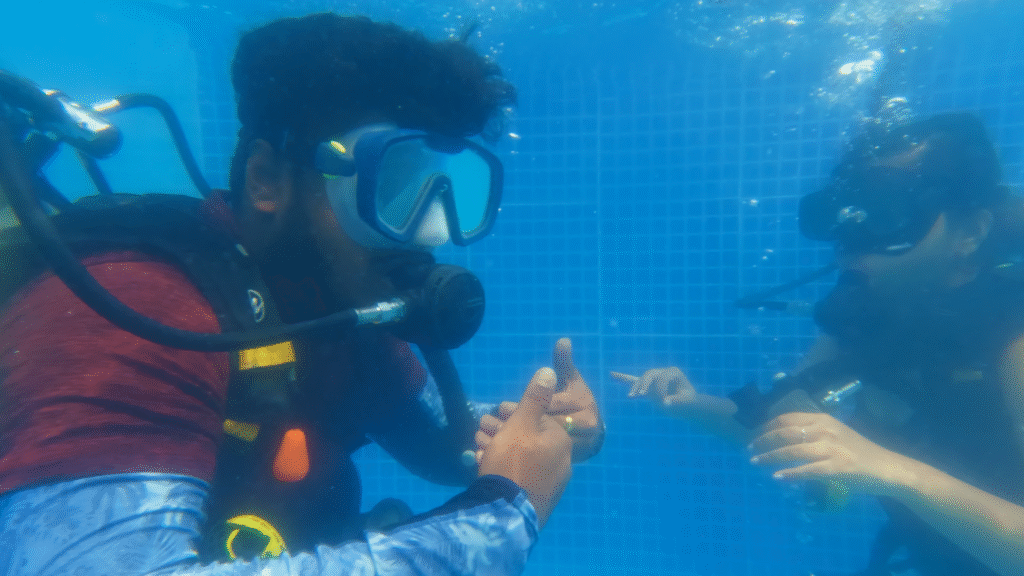
2. Confined Water Training
This is where you learn and practice:
- How to assemble and disassemble your scuba gear
- How to use your BCD, regulator, gauges
- How to clear water from your mask
- How to recover a lost regulator
- Buoyancy control basics
- How to inflate/deflate your BCD
- How to sink, hover, and stop
- How to use alternate air sources
- Underwater hand signals
- Basic rescue techniques
& It’s not limited to these techniques ,& This is the foundation of safe scuba diving.
3. Open Water Dives
Here’s where everything becomes real.
Your instructor takes you into the ocean, and you practice:
- Buoyancy in real conditions
- Depth limits
- Safety stops
- Underwater navigation
- Breathing stability
- Controlled descents and ascents
The first dives focus heavily on buoyancy — because 90% of diving comfort comes from mastering it.
Course Duration: How Long Does It Take?
Standard Duration: 3–4 Days
Most people finish the course in 4 days, which is the most comfortable pace.
Day 1 & 2 — Confined Water
Day 3 — 2 Shore Dives
Day 4 — 2 Boat Dives
Fast-Track Options
Yes, it’s possible to fast-track:
- 3-Day Course: Confined water completed in 1 day
- 2-Day Course: Confined sessions done in a pool before arrival
We offer both formats when needed, but 4 days is ideal.
PADI Open Water Diver Course Cost in India
The cost depends on location and the dive school: For Booking – Visit Here
- Andaman: ₹26,000 – ₹28,000 (excluding GST 18%)
- Lakshadweep: ₹28,000 – ₹30,000 (excluding GST 18%)
This includes:
✔ All equipment
✔ All confined + open water dives
✔ PADI certification fees
✔ Instructor charges
Included Gear
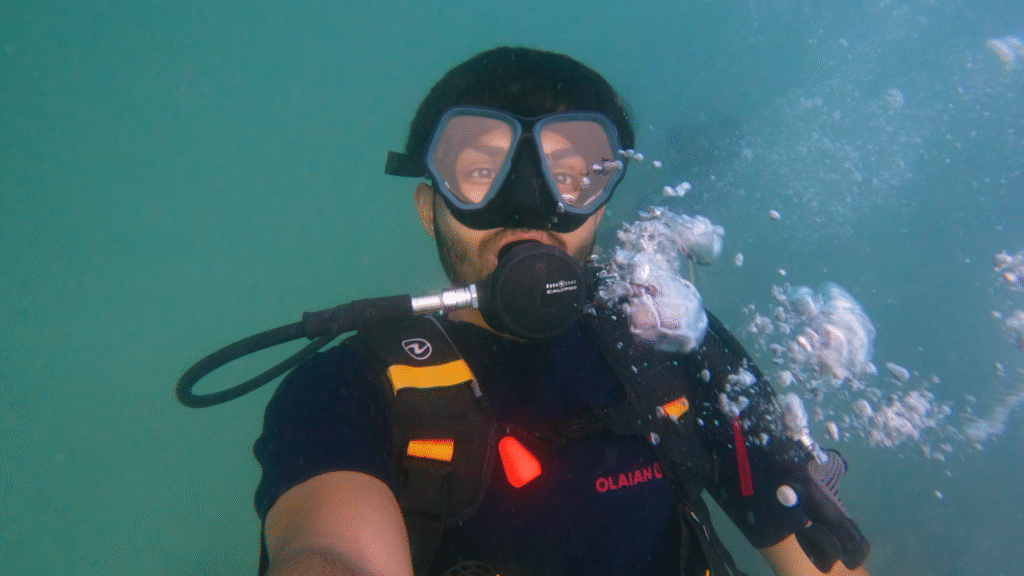
Every PADI course includes:Fins, Wetsuit, BCD, Regulator + octopus, Pressure gauge, Mask, Tank, Weights.
You should consider buying your own scuba mask — it enhances comfort and fit.
How to Prepare for Your First Dive
A few tips that will make your diving experience smoother:
Fitness & Breathing
Scuba isn’t physically demanding, but:
- Practice basic swimming
- Try yoga asanas for breath control
- Practice diaphragmatic (belly) breathing
High-level divers control 90% of buoyancy through breath alone.
Things to Bring
We provide all the scuba gear — you just bring:
- 50+ SPF sunscreen
- Slippers
- Towel
- Swimwear
- Water bottle
Best Places to Take the PADI Open Water Course in India
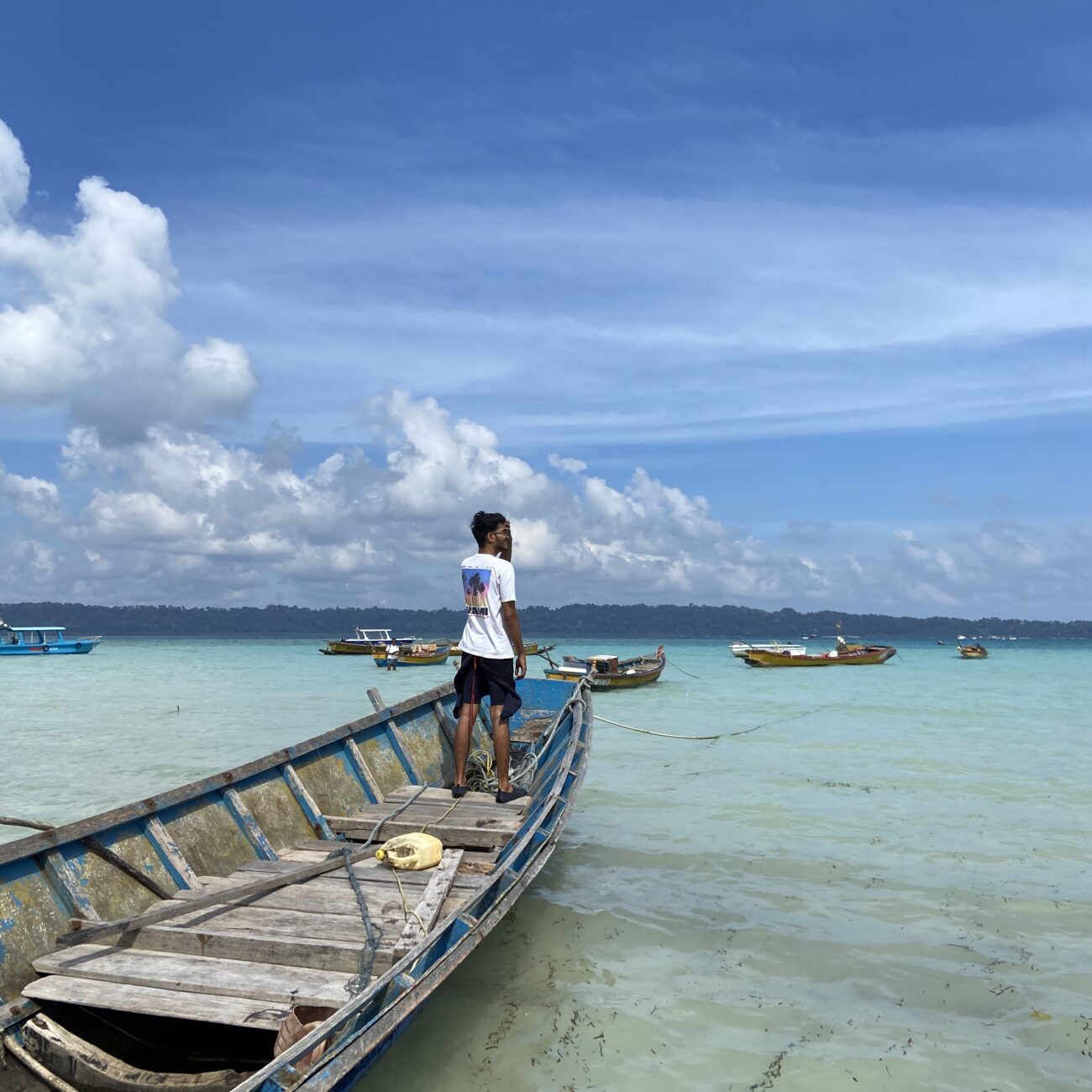
1. Andaman (Havelock & Neil Island) — #1 in India
Best clarity, best dive sites, best marine life.
Perfect for beginners who want a magical first dive experience.
Havelock — lively, fun, more options
Neil Island — peaceful, slow, and quiet
2. Lakshadweep — Unreal Visibility (But Permit Issues)
Hands down the cleanest waters in India.
But the permit process makes it tricky — if you get a chance, go for it.
3. Karnataka (Netrani Island) — Budget-friendly
If you want great visibility without spending on flights + resorts, this is perfect.
We currently facilitate courses in:
- Andaman (Havelock & Neil Island)
- Lakshadweep
- Netrani Island (Karnataka)
And soon: Tawang, Dawki, Nidrani Island, Meghalaya, and more.
A professional instructor once told me:
“The best visibility of the mainland is equal to the average visibility of an island.”
That alone says everything.
FAQs About the PADI Open Water Diver Course (2025)
Q1.How long is the PADI Open Water certification valid?
This is a great question. While instructor-level certifications need yearly renewal, your PADI Open Water and Advanced Open Water certifications are valid for life. Once you’re certified, you can dive anywhere in the world — anytime.
Q2. Is the course hard for beginners?
The biggest challenge beginners face is maintaining buoyancy. But once you get comfortable in the water, stay calm, and focus on your breathing, it becomes manageable. Small things like controlling your breath, not moving too much, and relaxing your body help a lot. And of course — your instructor will guide you through every step.
q3. Do I need to be a strong swimmer?
Not at all. You just need to be comfortable in the water. That’s all you need to begin your scuba diving journey.
q4. Can you take the course if you wear glasses?
Yes! If you wear glasses, just communicate the same to your dive company or to us. We’ll arrange a numbered dive mask so you can see clearly underwater.
q5. Do I need to know how to dive before starting?
Nope — the whole purpose of the course is to teach you how to dive. Just get slightly comfortable in the water before you come, and we’ll take it from there.
Happy diving! If you are an adventure enthusiast, check out more adventure sports courses here.

Christopher Noland
Lorem ipsum dolor sit amet, consectetur adipisicing elit, sed do eiusmod tempor incididunt ut labore et dolore magna aliqua.
Aakash Jain
Where are you going for your Open Water?